


New Year Focus & Creativity
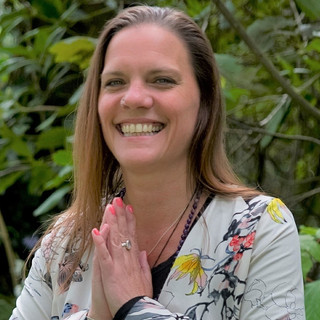
Maybe you have set the goals for this year.
I'm more of a fan of riding with the seasons, and taking bold action in Spring. But it doesn't hurt to use our Gregorian calendar as a benchmark, seeing as it's here.
So how can we sustain deep focus and creative cognition to get the thing done when we are in such a distracted digital world?
Use it or lose it.

Multitasking and AI hustle culture fracture attention and drain creativity.
Creative cognition (your memory, perception, imagination, problem-solving) is part of the joy of being human, it generates novel and wild ideas, applying existing knowledge in new ways, using networks in the brain like the Default Mode Network (DMN) and Executive Control Network (ECN) - working together for insight and discovery. This is how we form new concepts, combine ideas, and find solutions, through daily practices like mental rehearsal (some may even say day dreaming or mind wandering). Imagination is power
Because I’m a type A easily distracted being, I need a holistic, informed, simple single tasking approach. I need to be rooted in nervous system regulation, sacred containers, and strategic simplicity, which restores presence, productivity, and flow - and makes for conscious businesses.
I have had to train, in order to do this - there is no quick hack. There are many small moves we can make to create a compounding new habit system though.
The real focus dilemma
Whether we are diagnosed by the system or not - we have an attention issue.
We find it difficult to decide, and then focus on one thing at a time, through to completion.
As creative entrepreneurs we wear many hats: visionary, manager, guide. Add shiny object syndrome and constant digital input, and energy leaks and disperses. Impact thins. The cost is not just operational, it is energetic and emotional.
Fragmented attention actually dulls intuition, pushes creators into reaction, and imprints work with a frantic signature. For soulful entrepreneurs, focus is not force. For me it is devotion. Sustained attention is regenerative. It settles the nervous system, honours the creative channel, and deepens the quality of the things we consciously, intentionally create with presence.

Is multitasking a myth then?
Yes, it's complete shite.
Cognitive science (so - it must be true) shows the brain does not perform two demanding tasks at once. It switches rapidly between them, paying a price in time, energy, and accuracy. Interruptions increase stress and degrade quality over time. Meanwhile, modern screen behaviour has shortened attention windows dramatically, with average on screen focus now often under a minute.
The result is speed with no actual depth, motion without meaning and often being busy and feeling mediocre. It’s tiring and frustrating.
Digital brain rot and attention erosion
“Digital brain rot” is a thing - it describes the cumulative impact of high-volume, low-depth ‘slop’ content consumption. Constant scrolling fragments cognition and weakens sustained attention. When focus is continually split, creative work becomes shallow and coherence dissolves, it gets messy and we feel messy.
Whilst mess is definitely part of the human experience and creative process - we still need to find a balance so we can actually get shit done and finish the things we start.

The nervous system and creative depth
Frequent task switching is tempting when it’s a pattern we have survived on - it activates the sympathetic nervous system, the fight-or-flight state. Creativity, however, thrives in parasympathetic safety, the rest-and-digest state where insight, nuance, and intuition emerge. It’s this intuition that we can train in order to become more of who we truly want to be, and we train it through being present with ourselves - one step, and one thing at a time.
Single tasking signals safety. It allows the body to settle and the mind to open. Flow is not a mindset trick. It is a physiological state.
Presence changes the quality of work
Depth compounds quality. We feel it!
Single-tasking moves you beyond surface ideas into original insight. Coherent energy is felt by audiences, even if they cannot name it. Presence creates work that has a precise quality, authority, and resonance.
Rituals that prepare you for deep work
I am all about creating rituals and containers because it gives my scattered creative brain some structure. Think of preparation as practical energetics.
Align your environment. Clear visual clutter. Keep only what is needed. Choose one sensory anchor such as essential oil, or a simple instrumental playlist. Get the senses intentionally involved, to keep you in your body.
Ground the body.
Shake out the hands.
Stomp the feet.
Move your head and eyes.
Drop awareness from the head into the pelvis. Imagine roots connecting you into the earth.
Create a sacred container.
Put your phone on Airplane Mode or leave it in another room.
Let others know you are unavailable.
Treat the focus block as ceremonial, not negotiable.
Why we self-interrupt
Much distraction is emotional, not informational. Self-initiated interruptions make up a large share of task deviation. We reach for stimulation to avoid discomfort: uncertainty, fear, self-doubt, or boredom.
Naming the feeling reduces its grip. Presence grows through being real and honest with ourselves, not through self discipline alone. This is about self awareness and observation and that often means slowing the pace.
Returning without self-criticism
Practise the Soft Return. This is a subtle daily practice.
Notice the drift. Accept without judgement, be kind but firm with yourself (be your own parent). Return gently to the task.
Each return strengthens your capacity for focus (practice is progress).
This also exercises the internal dialogue to move away from the inner critic, and closer to a more gentle internal alignment.
How long to focus
I work with ultradian rhythms. Generally we have a few peaks of 90 minutes through the day. I use a pomodoro timer method for specific focused work which always includes a break of true restoration. Avoid swapping one screen for another. Restore with movement, nature, water, or nourishment.

The Hero Task (aka eat the frog)
The Hero Task is the single action that meaningfully moves your business forward today.
Do it first, when your energy is clean. I make this my first focus block of the day, scheduled in my calendar, before my apps wake up (I snooze everything external until 10am).
Constraints reduce decision fatigue.
Fewer choices, and specific intention create a clearer channel.
Closing open loops and contracts
The first example of the day is making the bed. Close the loop and contract with sleep, and begin a contract with the morning.
Unfinished tasks drain mental energy. Close loops by completing, delegating, or consciously deleting. Decide not to do certain things. Reclaim cognitive space for what matters.
Beyond business
Sustained attention at work trains presence in every day life. Listening deepens. Experiences become richer. Focus becomes a way of relating, not just producing.
Why holistic single-tasking works
It reframes focus from hustle to devotion. It is nervous-system informed, not willpower driven (willpower only goes so far).It aligns with research on attention, recovery, and cognitive load. It protects energy through clear boundaries and digital hygiene. It produces work that feels real and fulfilling.
Fast-start practice
Define today’s Hero Task in one sentence.
Create a 90-minute sacred container.
Clear your space.
Choose one sensory anchor.
Ground the body for two minutes.
Begin with the smallest next step.
Use the Soft Return when you drift.
Break intentionally. No screens and move the body.
Close one open loop.
Reflect briefly, then continue or rest.
Why this matters now
We are in a noisy economy, a distracted world that demands our attention, and we have the temptation of AI tools in the name of efficiency. None of this is going anywhere - and if we give too much of our power away.. Who are we and what are we doing?
I use AI as a tool to support my mission. This piece in fact has been structured in partnership with my own AI tools as I explore with my buddy Rich in the tech team.
BUT I refuse to hand over my creativity and cognitive function, especially when I know the way to strengthen my focus muscle is to use it.
Reclaiming focus through single-tasking, ritual, and nervous system self care and self regulation allows you to create your most resonant work without stress or burning out. This is Presence as strategy and it changed my life.
For all things focus, creativity, and sustainable business, explore resources at www.clarebelmont.net. This work is for conscious creators who are ready to lead by example - you're bloody brilliant and the world needs our collective mission!



mình có lần lướt đọc mấy trao đổi trên mạng شيخ روحاني thì thấy nhắc nên cũng tò mò mở ra xem thử cho biết. mình không tìm hiểu sâu جلب الحبيب chỉ xem qua trong thời gian ngắn để quan sát bố cục جلب الحبيب cách sắp xếp شيخ روحاني các mục và trình bày nội شيخ روحاني dung tổng thể. cảm giác là các phần được trình bày khá gọn, các hurentest berlin mục rõ ràng nên đọc lướt cũng không bị rối جلب الحبيب với mình như berlinintim vậy là đủ để nắm tin cơ bản rồi. جلب الحبيب
What an incredible piece — Stanislav Petrov's story is one of those rare historical moments that genuinely makes you pause and reflect. The fact that he wasn't even supposed to be on duty that night, and yet his calm, analytical thinking under unimaginable pressure is what prevented a nuclear catastrophe, is both humbling and fascinating. What really stands out is how his decision went against rigid Soviet military protocol — he trusted his gut and his engineering knowledge over a flashing alarm system, and that instinct potentially saved billions of lives. It's a sobering reminder of how fragile peace can be and how a single individual's judgment can carry the weight of the entire world. Stories like this deserve to…
This is a refreshing perspective on creativity and productivity in a world full of distractions. I appreciate the emphasis on single-tasking, nervous system regulation, and allowing space for imagination to flourish. The connection between focus and meaningful work is powerful. Just as a marketing course helper can guide students through complex concepts, intentional practices can help us develop clarity, creativity, and sustainable success.
It is so inspiring to start the year by prioritizing creativity, as focusing on new artistic outlets is the perfect way to keep your professional perspective fresh and energized! I have been trying to dedicate more time to my creative writing and digital art projects lately, but balancing these passions with the rigorous algorithmic and data processing demands of my technical modules has been quite a challenge. I actually sought out some computation assignments help recently just to stay on top of my programming tasks while I took the time to truly focus on my creative goals for the year.
scattered,I really resonated with your idea that focus is devotion, not force. During a heavy semester, I once searched for a Nursing exam help service because my attention was so scattered and I felt behind on everything. What actually helped was single-tasking and protecting one quiet block each morning. Your ritual approach makes focus feel grounded and human instead of frantic. Presence truly changes the quality of what we create.